Saturday, November 11

Molvania, jchufg!


I am too much of laughing, and the salty water is coming from my eyes and the nose. Would that you could also enjoy the armchair visit to Molvania. But if you are going to the http://www.jetlagtravel.com/molvania/ you will be flowing the salty water also from the facial places. Is too funny and also educational learning about the folk customs and entertainment situations in Molvania.

Please be mzy guejst.

Sunday, November 5

Property Values, or Quality of Life?

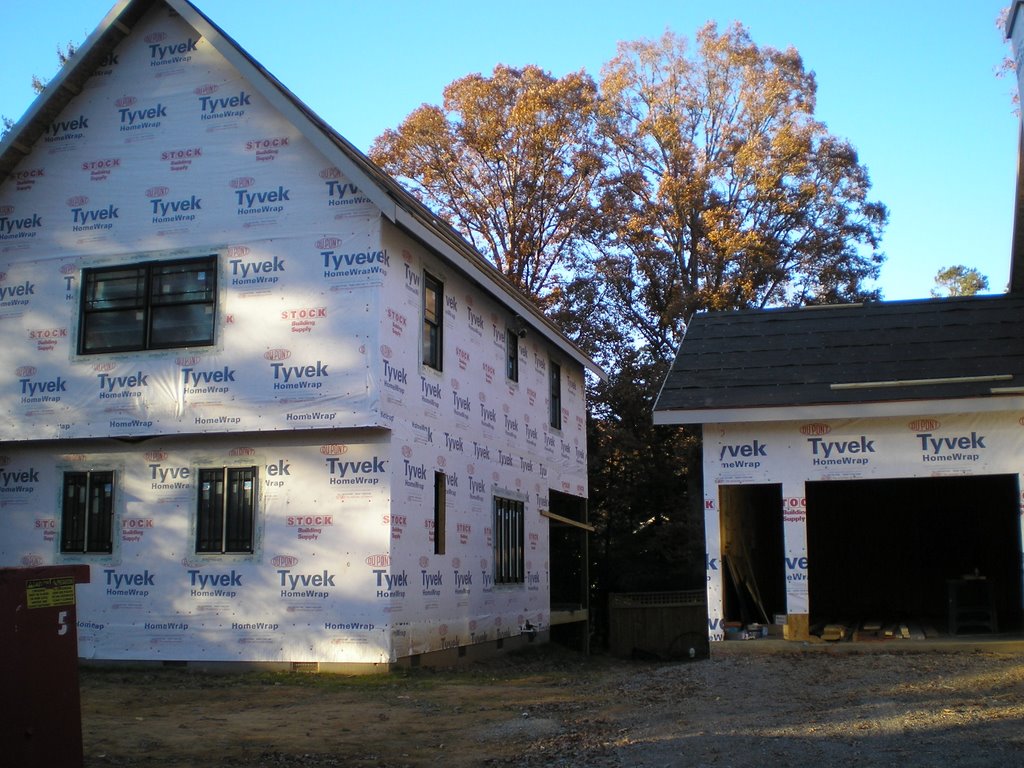
My neighbor up the street, at 6 Buckingham Ct. (the yellow house below on the left) said, in answer to my question of how he like the huge houses going up across the street from him, said, "Hmmm... Well, it'll raise property values." My feeling is that property values are plenty high here already and that Kenilworth is in no danger of becoming devalued. I would prefer that my little one-block long street, containing mostly 1920s "Craftsman style" (more or less) bungalows from the 1920s and '30s stay as it is. The big houses have been, until now, up on the avenue and down on the circle. I like my little house, and its neighbors, and my neighbors like their little houses. But Progress rolls inexorably on, and a neighbor on the next street to the north decided to subdivide his lovely property, which runs through to Buckingham Ct. (as all the properties once did) and build two enormous houses on his lot. They're not McMansions, I'll give you that, but to me they don't fit in with the character of our lovely little street. here are pictures of the typical Buckingham Ct. houses, and then the new Things:


I'm not sure that you can get the scale from this display; you'll just have to accept that these houses TOWER over the bungalows. The picture on the right shows the end of the one on the left, and its proximity to the one to its right (not pictured, as you have enough here). Not to mention that the lovely Spanish style stucco house behind these two (the one whose owner did the subdividing) was formerly an impressive-looking hosue. Now you can't even see it from my street.
(And not to mention, as well, that I have had to change my house number from 7 (which my son-in-law points out is a prime number, and I want to say is one digit above where I grew up in RI, at a house numbered 6) to 9 (not prime). My daughter says, It's not a big deal, Mom, get over it. Of course I will, but I don't like it. Plus, the mailman, who has nagged me to change my address and change the number on the mailbox, keeps delivering mail to me that belongs to the neighbors at former #5, now #7.)
Some of these things are, of course, piffle before the wind, as Mr. Salteena said, and on the grand scale I KNOW that I'm lucky (NOT Blessed, mind you, just lucky) to be a middle class American and have a nice house to live in. But we act and feel from where we are, and this is my diatribe for Sunday, November 5, which is Cary's birthday (also my brother-in-law), and I should send him greetings and then go out and buy some meat and green chiles for a stew for company tonight.

Saturday, November 4

The Road


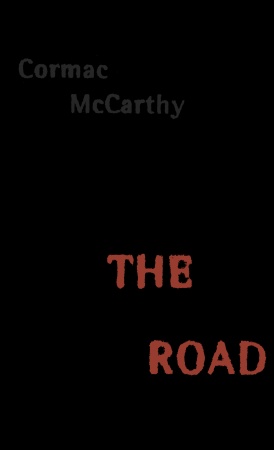
I woke up the other morning at 4:00 and was inexplicably wide awake and refreshed. By my bedside was Cormac McCarthy's new novel, The Road. So I got up and grabbed a cat and made some coffee and sat in bed and read the book. At 7:00, when it was time to quickly get dressed and go to work, I finished the book. It's a stunning story. The only McCarthy I'd read before was All the Pretty Horses, and while I don't remember much about it I do remember that the language was intricate and fascinating. I haven't been tempted to read any of his since. But this one called out to me, and I ordered it online (yes, you can get new books at a discount from wonderful online booksellers, namely Powells.com, which is my choice over Amazon.)
I think I'll have to read it again, to really savor it and remember details. It's a post-apocalyptic story, very bleak and almost hopeless, but whether or not you take the ending as a hope of some better future for the human race (one reviewer speaks of a deus ex machina at the very end, a criticism that suggests a copout on the part of the writer), what transforms the black ash bleakness of the story is the relationship of love and the dogged going-on of the father and small son. Whatever is to happen next is left to our imagination. Rather than doing a copout, I think McCarthy wants us to ponder the possibilities forever. After all, an open-ended story lingers in one's mind a long time, possibly forever, something I realized at age 14 when I read Gone With the Wind.
The world of the novel is desperate and desolate and dangerous. And yet the father holds his child's hand and keeps going, toward the coast. As you read, you think, but why? what will they find but more desolation? But some essential life energy keeps them going, and the father's love for his son and the son's trust in his father. "We're the good guys, right?" "Right." To his father's insistence that they keep on going, the son always replies, "Okay." It's hope still working in a hopeless world, and the trust of a child in his parent.
And let me be maybe the first in cyberspace to link this book to two other haunting books, both by Russell Hoban: Riddley Walker and The Mouse and His Child. The former is an obvious connexion: the post-apocalytic world. But although the journey of the Mouse and his Child is set in an un-ruined world, it's still a story of love and hope in a bleak and confusing landscape. So far, a Google search to link the Mouse to this new novel yields no results. We'll see if it strikes anyone else. I've put it out on the kraken, the Hoban group on the web.

Friday, November 3

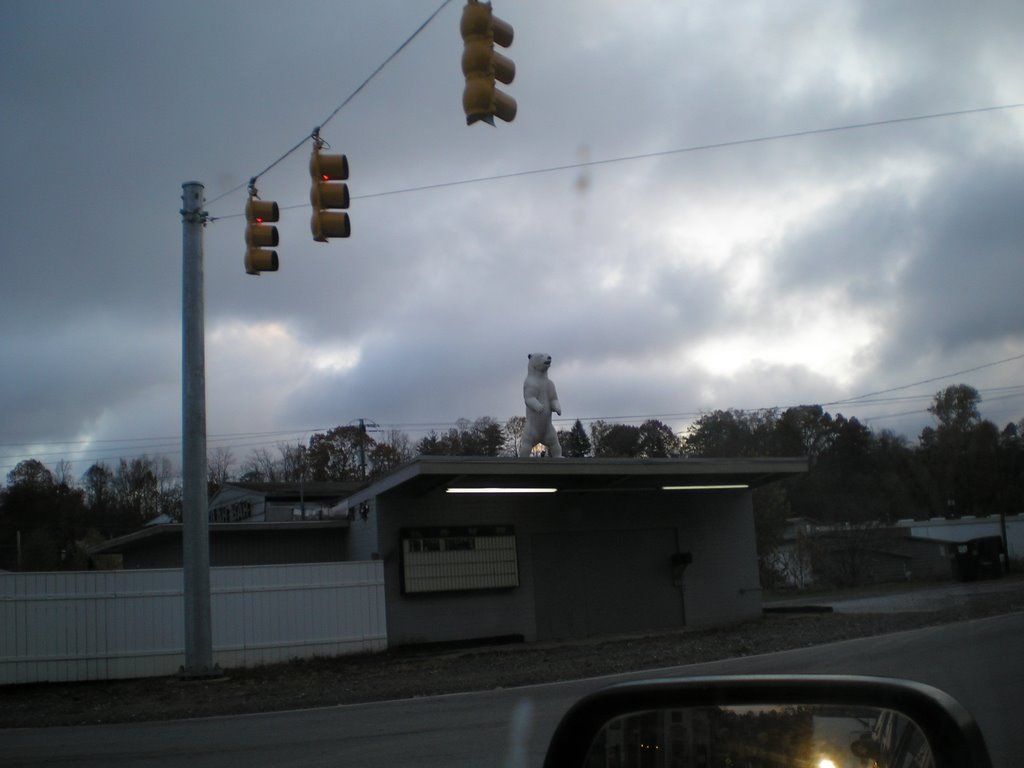
Dawn Glimpse of My Totem

The camera caught a glimpse of him from my car on my way to work. He lights my travels and inspires me. Closer-ups to come.

Saturday, October 28

Idling

Now, I'm a confirmed coffee drinker and hate tea. Tea makes me feel ill. But in Tom Hodgkinson's wonderful book How to Be Idle (HarperCollins, 2005, in its first U.S. edition), tea is praised as the civilized drink for people who desire to savor life and eschew the frenetic pace of post-industrial life, which he sees as fueled by coffee. Here is a portion of a 16th century Chinese poem by Hsu Ts'eshu (there's suposed to be an umlaut or the Chinese equivalent on the first "u"), as quoted by Hodgkinson:


Proper Moments for Drinking Tea

When one's heart and hands are idle...


Tired after reading poetry...


Engaged in conversation deep at night...


Before a bright window and a clean desk...


When the day is clear and the breeze is mild...


On a day of light showers...


In a painted boat near a small wooden bridge...


In a forest with tall bamboos...


In a pavilion overlooking lotus flowers on a summer day...


In a quiet, secluded temple...


Near famous springs and quaint rocks....


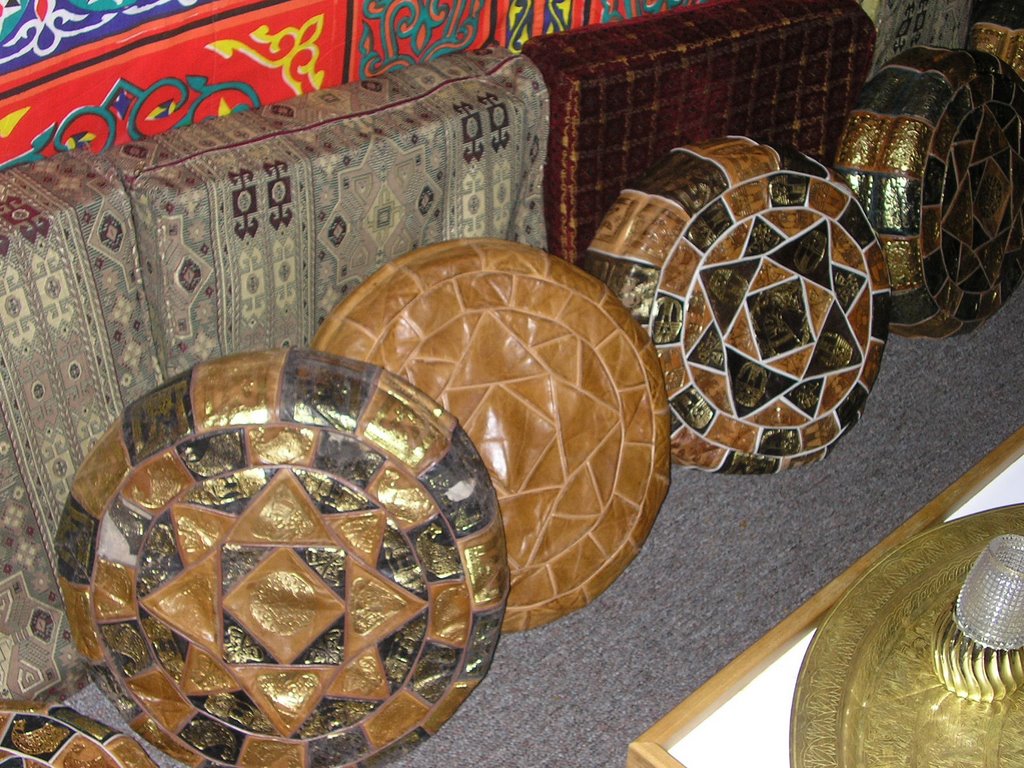
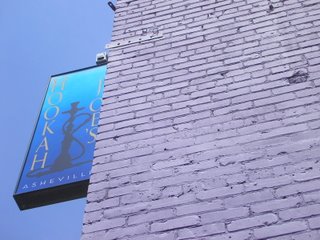
My picture is from a local Middle Eastern restaurant, where more coffee is consumed than tea, but it suggests a similar inclination for relaxing, drinking, and conversing. And here's another local spot for idling: